From Keyword Matching to Vector Retrieval: Three Ways to Search
Search is not one technique. Keyword matching finds words that appear literally, fuzzy search rescues misspellings and partial input, and vector retrieval finds content with similar meaning. In RAG systems, these methods usually complement each other rather than replace each other.
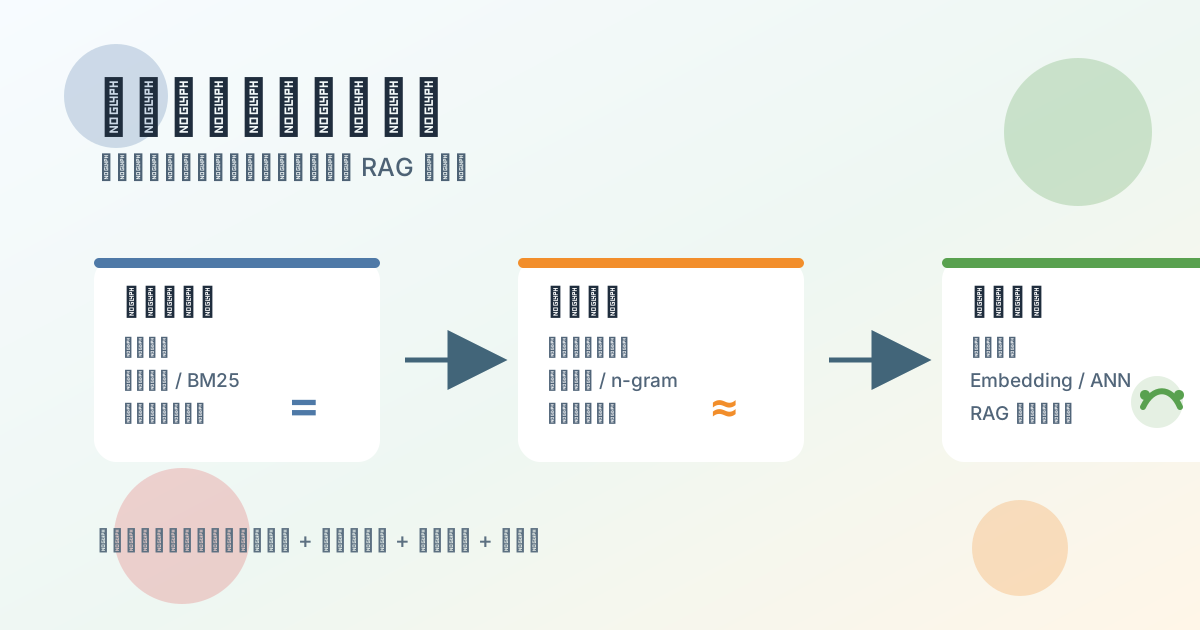
A quick example:
| User intent | Input | Best starting point |
|---|---|---|
| Find an explicit rule | refund policy |
Keyword matching |
| Recover a typo | retun policy |
Fuzzy search |
| Ask naturally | Can I change my mind after buying this? |
Vector retrieval |
| Need both precision and semantics | Can a premium member refund the wrong plan? |
Hybrid retrieval + reranking |

Keyword Matching
Keyword matching is the classic information retrieval approach. Documents are tokenized, indexed, and ranked according to term overlap, term frequency, field weights, and document length.
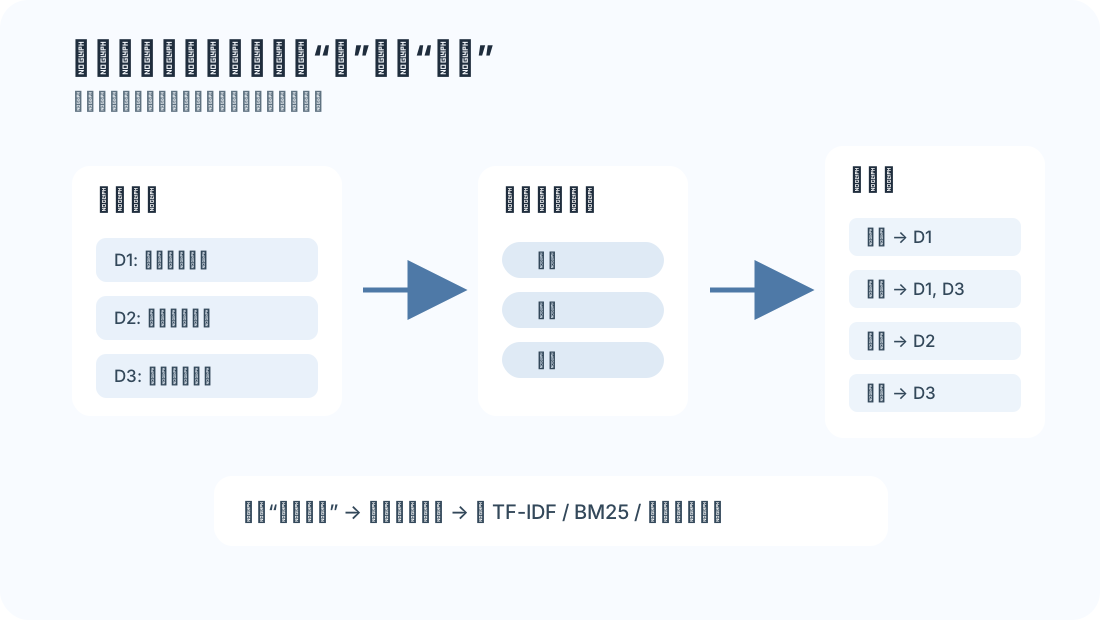
The most common structure is an inverted index: instead of scanning documents one by one, the system maps each term to the documents that contain it.
| Aspect | Notes |
|---|---|
| Matching signal | Literal term overlap |
| Common algorithms | TF-IDF, BM25, Boolean queries, field boosts |
| Strengths | Fast, stable, explainable, easy to filter |
| Weaknesses | Poor at synonyms, paraphrases, and unstated intent |
| Best for | SKU, order id, logs, legal clauses, code symbols, titles |
If a user searches for redis setnx, keyword retrieval is excellent. If they search for how do I prevent duplicate orders, a purely lexical system may miss articles that only mention idempotency or distributed lock.
Fuzzy Search
Fuzzy search is still lexical search, but more tolerant. It asks whether the user input and the indexed term look similar enough.
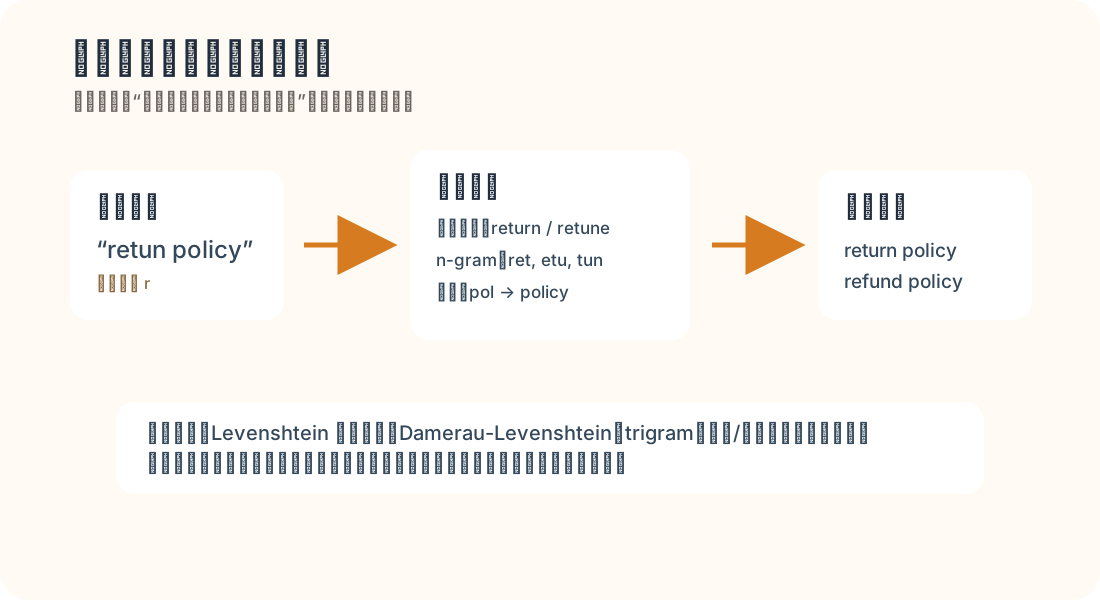
Common techniques include:
| Technique | Solves | Example |
|---|---|---|
| Edit distance | Insertions, deletions, substitutions, transpositions | retun → return |
| n-gram / trigram | Substring similarity | microserv → microservice |
| Prefix matching | Autocomplete | kuber → kubernetes |
| Phonetic or pinyin correction | Input method mistakes | pinyin-like input → Chinese term |
| Synonym dictionaries | Manually curated near-equivalents | after-sales ≈ returns |
Fuzzy search is great for search box ergonomics: typos, partial names, remembered fragments, and autocomplete. Elasticsearch, OpenSearch, Solr, PostgreSQL trigram, and Algolia all provide related capabilities.
But fuzzy search does not fully understand meaning. refund and return are semantically related, but they may not be textually similar. iPhone and Apple phone can be far apart lexically. Once recall is widened, false positives also increase, so fuzzy search needs thresholds, field boosts, popularity, click signals, and business rules.
Vector Retrieval
Vector retrieval uses an embedding model to convert text, images, audio, or other objects into numeric vectors. Items with similar meaning are close in vector space. At query time, the system embeds the user query and retrieves the nearest vectors.
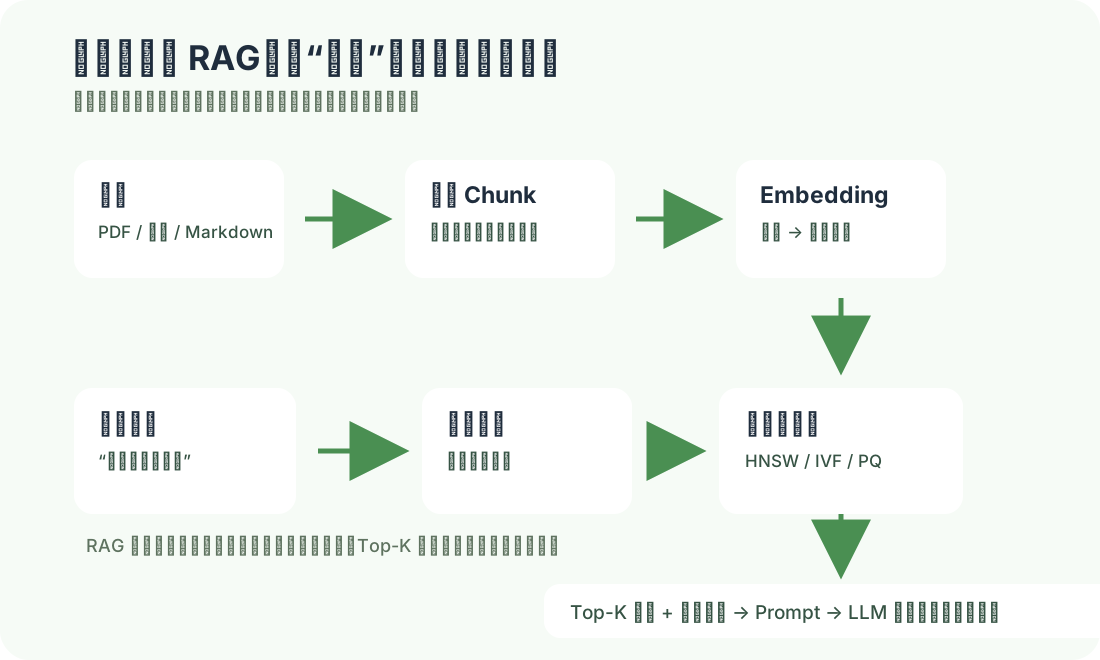
This is the retrieval foundation of many RAG systems: retrieve relevant chunks from a knowledge base, insert them into the prompt, and let the LLM answer with external context.
| Aspect | Notes |
|---|---|
| Matching signal | Semantic similarity in embedding space |
| Common indexes | HNSW, IVF, PQ, DiskANN |
| Common metrics | Cosine similarity, inner product, Euclidean distance |
| Strengths | Handles paraphrases, natural questions, cross-lingual and multimodal similarity |
| Weaknesses | Higher cost, weaker explainability, less reliable for exact constraints |
| Best for | Knowledge base QA, similar articles, image similarity, recommendations, semantic code search |
For example, a document may say:
|
|
A user may ask:
|
|
Keyword search may miss the connection. Vector search is more likely to retrieve the return policy because the meanings are close.
Vector retrieval is not magic, though. It is weaker for exact IDs, version numbers, permissions, and precise field filters. For HTTP 451, order 202610020001, or Go 1.22, lexical and structured retrieval are often safer.
Core Differences
| Dimension | Keyword matching | Fuzzy search | Vector retrieval |
|---|---|---|---|
| Focus | Did the term appear? | Is the term similar? | Is the meaning similar? |
| Query style | Precise, short, terminology-heavy | Typo-prone, abbreviated, partial | Natural, descriptive, long |
| Recall | Precise but can miss | Wider lexical recall | Strong semantic recall |
| Explainability | High | Medium | Lower |
| Latency and cost | Low | Medium | Medium to high |
| Typical tools | MySQL, Lucene, Elasticsearch BM25 | Elasticsearch fuzzy, trigram, Algolia | FAISS, Milvus, Qdrant, Pinecone, Weaviate |
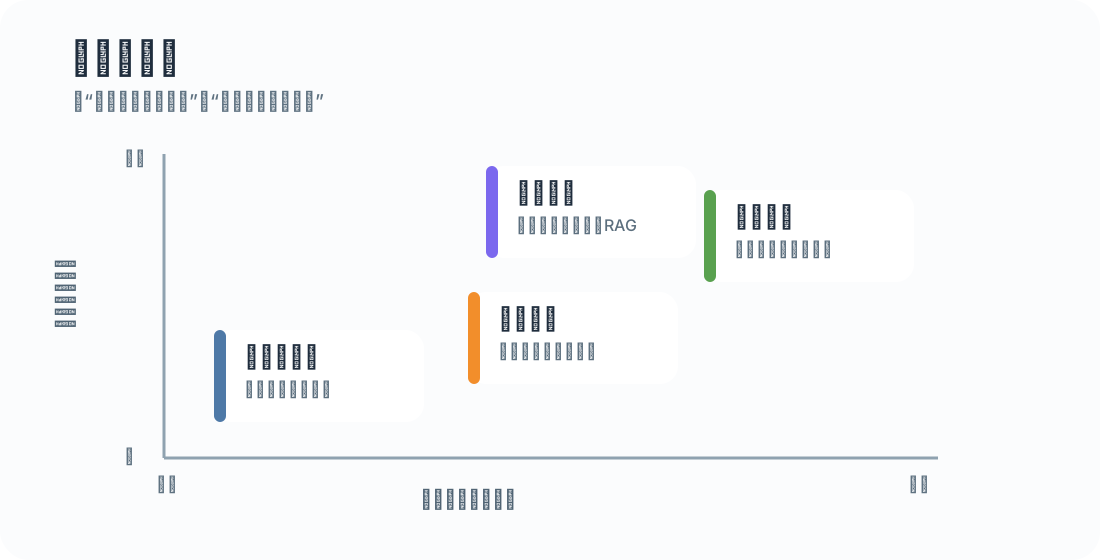
A simple mental model:
|
|
Classic Applications
| Scenario | Recommended approach | Why |
|---|---|---|
| Log search | Keyword + time/service filters | Exact error codes and fields matter |
| E-commerce search | Keyword + fuzzy + vector recall | Product names need precision, user input is messy, recommendations need semantics |
| Code search | Symbol index + keyword + semantic vectors | Names matter, but user intent can be natural language |
| Enterprise knowledge QA | Vector + BM25 + reranking + RAG | The system must understand questions, retrieve evidence, and cite sources |
| Image similarity | Vector retrieval | Visual similarity is hard to express with keywords |
| Help center search | Keyword + fuzzy + synonyms + vector retrieval | Users mix product terms and natural language |
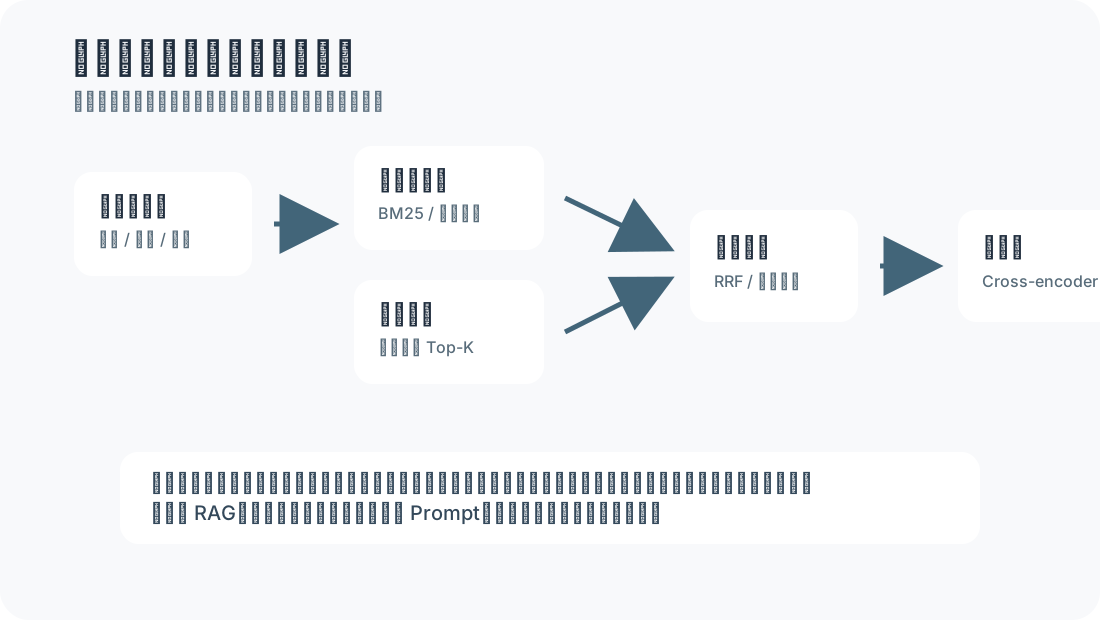
Enterprise RAG is the clearest example. Users rarely repeat document titles exactly. They ask questions like “Why was this reimbursement rejected?” or “How does sick leave work during probation?” A robust system filters by permissions, retrieves candidates with both BM25 and vectors, reranks them, and sends only a small set of reliable chunks to the LLM.
Practical Selection
Use this quick guide:
| Problem | Start with |
|---|---|
| Users type order IDs, error codes, function names, or exact terms | Keyword matching |
| Users often misspell, abbreviate, or type only prefixes | Fuzzy search |
| Users describe intent in natural language | Vector retrieval |
| You need exact filters, semantic understanding, and LLM grounding | Hybrid retrieval |
Production search is usually a layered system:
- Structured filters: permissions, tenants, time, category.
- Keyword recall: BM25 protects exact terms, titles, IDs, and entities.
- Vector recall: captures paraphrases and semantic intent.
- Fusion: RRF or weighted scoring merges candidate lists.
- Reranking: cross-encoders, LLM rerankers, or business rules refine the final order.
- Generation: in RAG, only the most relevant and trustworthy chunks are inserted into the prompt.
The Takeaway
Keyword matching answers “does this word appear?” Fuzzy search answers “was this word typed imperfectly?” Vector retrieval answers “what does this query mean?”
For a normal search box, start with keyword retrieval, tokenization, field boosts, and fuzzy correction. For knowledge QA or intelligent support, add vector retrieval and RAG. For real production systems, hybrid retrieval is usually where the design lands, because users alternate between exact identifiers and vague natural language all the time.